"There are three ways to ultimate success:

The first way is to be kind.

The second way is to be kind.

The third way is to be kind.”

— Fred Rogers

Who

Kindness and connection matter at every age and in every setting, because they are skills we carry with us for life, shaping how we learn, work, and live together.

Schools and Education Settings

  • Elementary schools

  • Middle schools

  • High schools

  • Colleges and universities

Learning Beyond the Classroom

  • Homeschooling families

  • Alternative and hybrid learning programs

  • After school and youth programs

Communities and Workplaces

  • Adults in the workplace

  • Community groups and organizations

Why

Many students struggle to build friendships, be kind to themselves, and care for others.

Builds connection where it is missing

  • Helps students feel seen, included, and valued

  • Encourages positive peer relationships

Supports emotional well being

  • Promotes healthy self-talk and empathy

  • Reduces comparison, isolation, and negative interactions

Improves daily classroom dynamics

  • Encourages respectful communication

  • Helps prevent small issues from becoming bigger problems

Creates a safer learning environment

  • Strengthens trust between students

  • Helps classrooms feel calm, respectful, and supportive and ready to learn

How

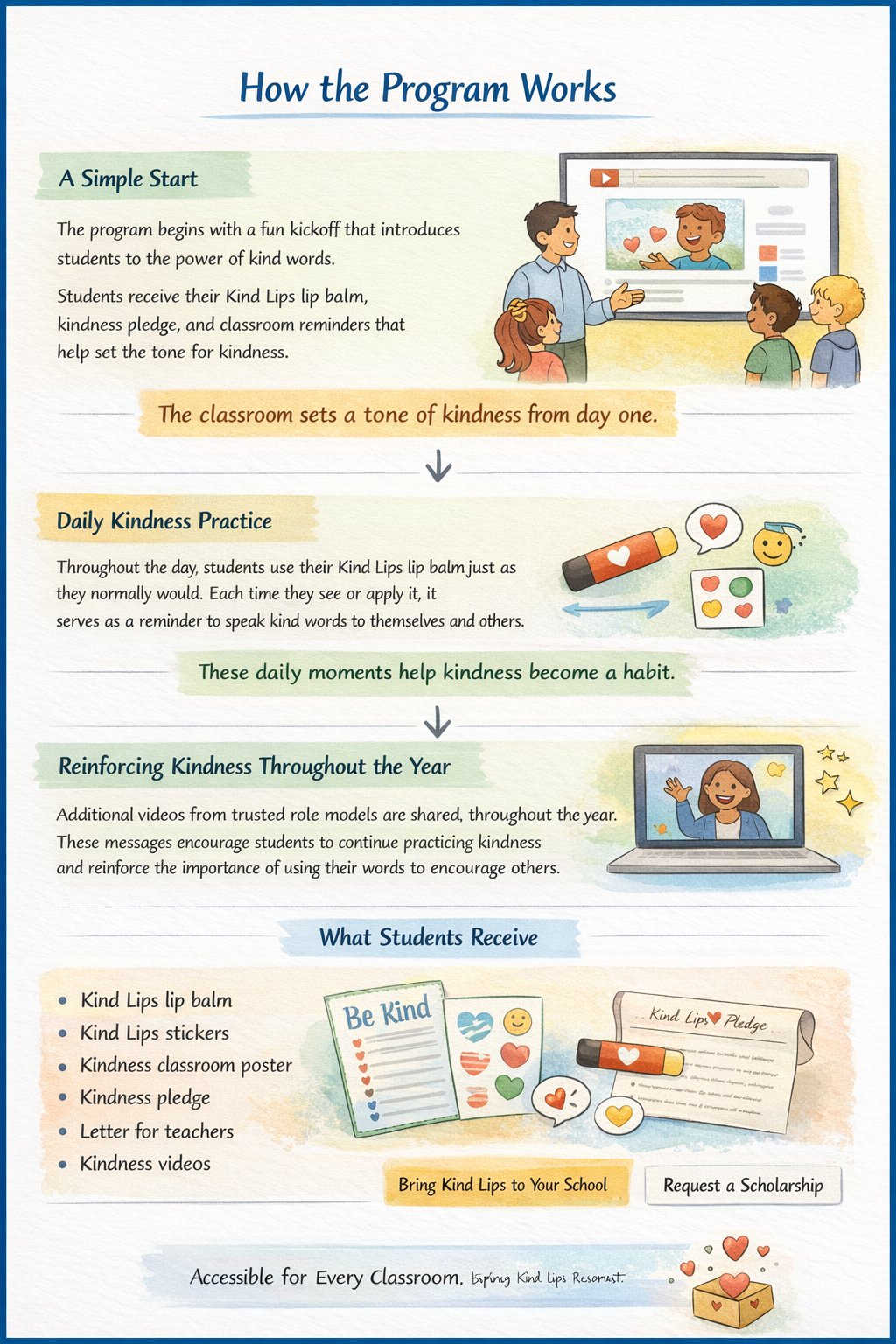
Fits naturally into the school day without adding extra work for teachers.

Get started

  • Sign up or sponsor a school

  • Receive program materials and simple instructions

  • Begin any time during the school year

  • Easy to pair with SEL and other kindness programs

Starts with a simple kickoff

  • 15 to 20 minutes needed

  • Works well in morning meetings or homeroom

  • No prep or planning required

Reinforced through daily moments

  • Lip balm prompts kind words

  • Stickers and posters keep the message visible

  • Students remind each other to “Put your kind lips on”

Supported throughout the year

  • Monthly videos are sent out for ease

  • Improved behavior creates more time for learning

  • Parent letters encourage conversation at home